KOKEN LTD.
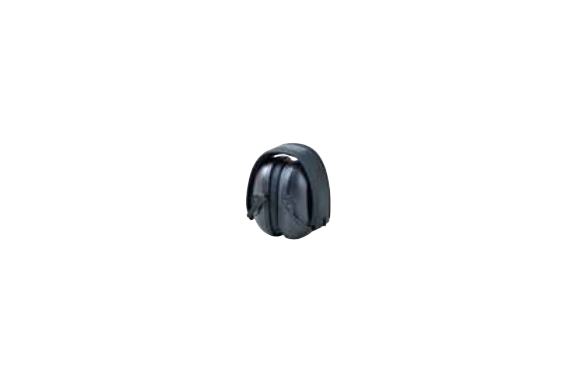
Koken VeriShield VS110F Hearing Protection
Manufacturer: KOKEN LTD.
Model: VeriShield VS110F
Safer, more comfortable.
NOISE PROTECTION EARMUFFS
VeriShield VS110F
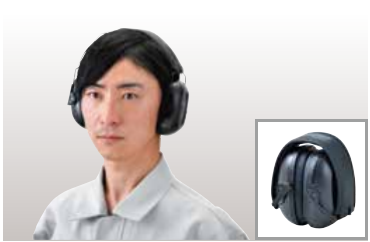
Description:
- This is a highly reliable earmuff type, used in various noise environments.
- The product can be folded neatly, which is not only convenient for storage but also helps keep the inside of the ear cups hygienic.
Specifications:
- Noise Reduction Rating (NRR): 24dB.
- Style: Headband type.
- Features: Compact design (folding type).
- Utility: Can be used in combination with safety helmets.
- Weight: Approx. 220g.
- Manufacturer: Honeywell.
■ Earmuff Performance: Sound Insulation Value (dB) (Average Value)
※ When the headband is attached over the head
| Frequency (Hz) | 125 | 250 | 500 | 1,000 | 2,000 | 4,000 | 8,000 |
|---|---|---|---|---|---|---|---|
| VeriShield | 16.8 | 22.1 | 25.2 | 27.2 | 31.3 | 40.3 | 42.1 |
TO PREVENT NOISE HAZARDS…
● Harmful effects of noise
- Various sounds exist around us (Table 1). “Noise” is the general term for unpleasant sounds or unwanted sounds for anyone.
- For workplace noise environments, to prevent hearing damage, the targets for control are excessively loud sounds (85dB(A) or higher).
- When noise occurs, it causes effects on the human body such as:
Psychological effects: Irritability, frustration…
Physiological effects: Nausea, high blood pressure… - This leads to reduced work ability, decreased attention span, and becomes a cause of unexpected accidents.
- Furthermore, if continuously exposed to noise, the hair cells (sound receptor cells) inside the ear will be destroyed, leading to Noise-induced hearing loss.
- For acoustic trauma caused by instantaneous loud explosions, early treatment can help recover, but hearing loss due to noise deafness is basically irreversible.
- Noise-induced hearing loss is a condition where hearing is gradually lost due to long-term exposure to noise (Table 2). In the early stages, the patient will not hear sounds higher than normal conversation (frequency around 4000Hz), so it is often not noticed in daily conversations. If you feel like you have “gotten used to the noise,” the situation may have become incurable.
- Noise-induced hearing loss tends to occur more easily as the sound pressure level gets higher and the exposure time gets longer. It is necessary to continuously maintain a comfortable working environment by lowering sound pressure levels or shortening exposure time.
● Noise Countermeasures
- Basic measures to prevent noise harm are environmental improvements, such as: eliminating noise sources, enclosing (isolating) noise sources, or sound absorption treatment.
- However, in reality, noise treatment is very difficult. If noise levels cannot be lowered as desired, it is possible that workers cannot avoid exposure to high noise levels.
- In such cases, hearing protection devices (such as earplugs, earmuffs) are the solution to prevent noise exposure at the individual level.
Legal Regulations:
According to the “Guidelines for Prevention of Noise-Induced Hearing Disorders” issued by the Ministry of Health, Labour and Welfare of Japan:
- It is necessary to conduct noise environment measurements at the workplace.
- In places with equivalent noise levels of 85dB (A) or higher, it is mandatory to improve the environment while simultaneously wearing hearing protection devices.
Practical Tip:
- Pay special attention if you have to shout to be heard by someone about 1m away.
- In that case, the noise level is considered to have reached 85dB (A) or higher.
Risk (%) of noise-induced hearing loss by years of exposure
| db (A) | Years | ||||||
|---|---|---|---|---|---|---|---|
| 0 | 5 | 10 | 20 | 30 | |||
| <80 | 0 | 0 | 0 | 0 | 0 | ||
| 90 | 0 | 4 | 10 | 16 | 18 | ||
| 100 | 0 | 12 | 29 | 42 | 44 | ||
| 110 | 0 | 26 | 55 | 78 | 77 | ||
(Excerpt from: “Workplace Noise Management”)
REQUEST QUOTATION
PAYMENT

LINK