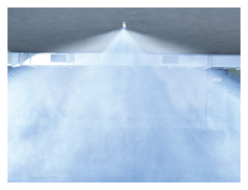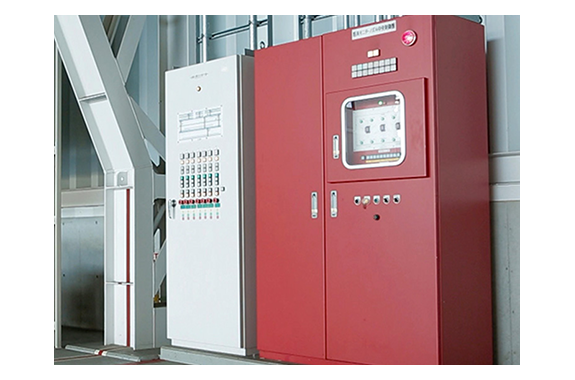
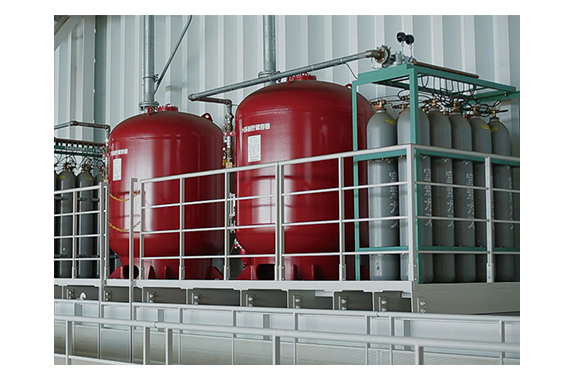
By releasing a large amount of fire extinguishing agent in a short period of time, a powerful fire extinguishing effect can be achieved.
Because it extinguishes fires instantly, it is ideal for firefighting systems dealing with hazardous materials and designated combustible materials that burn and spread rapidly.
The fire extinguishing agent is not affected by temperature and its performance does not change, so it can be used safely even in cold climates.
Because of its excellent electrical insulation properties, it can be used in high-voltage electrical equipment such as transformers.
The operation of the storage containers and other equipment is simple and straightforward, making it convenient to clean the piping after use.
Types and characteristics of powder fire extinguishing agents
| Main component | Features | color | Compatible fire | |||
|---|---|---|---|---|---|---|
| General fire (A) | Oil fire (B) | Electrical fire (C) | ||||
| Class 1 powder | sodium bicarbonate | This product consists of sodium bicarbonate (main component) in fine particles of 180 microns or less, with added anhydrous silicon, silicon, and other materials. | White or light blue | – | ○ | ○ |
| Type 2 powder | Potassium bicarbonate | These are fine particles smaller than 180 microns. They are also known as Purple K. | violet | – | ○ | ○ |
| Type 3 powder | Phosphates | It consists primarily of ammonium dihydrogen phosphate and comprises fine particles smaller than 180 microns. Each of these particles has a special coating applied to its surface using our proprietary manufacturing method to prevent moisture absorption. In addition, several components, including white carbon and talc, are mixed in as lubricants. Its characteristics are as follows: We pay special attention to the various stabilizers mixed in this product, so it is excellent at preventing the fire extinguishing agent from solidifying and absorbing moisture. The silicone coating on the fine powder particles is treated under optimal conditions, resulting in excellent water repellency. It has excellent fire extinguishing properties for fires of types A, B, and C. | pink | ○ | ○ | ○ |
| Type 4 powder | Potassium bicarbonate and urea | This fire extinguishing agent is called “Monex.” Developed by IC GmbH in the UK, it is a completely new powder fire extinguishing agent, a special compound of potassium bicarbonate and urea. It consists of fine particles smaller than 180 microns, which are treated with a special silicone and mixed with several types of lubricants. When exposed to flames, the heat causes each particle to further break down into ultrafine particles, increasing the active surface area and exhibiting powerful extinguishing capabilities. It can be said to be a suitable fire extinguishing agent for places where large fires are expected, such as oil refineries and aircraft landing pads. 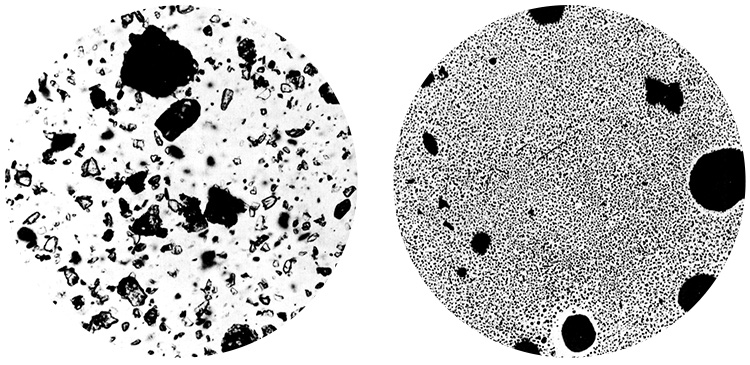 The photo shows how “Monex” particles decompose after exposure to fire. You can see that the particles are micronized and the surface area increases. | Gray | – | ○ | ○ |
System configuration diagram of powder fire extinguishing equipment
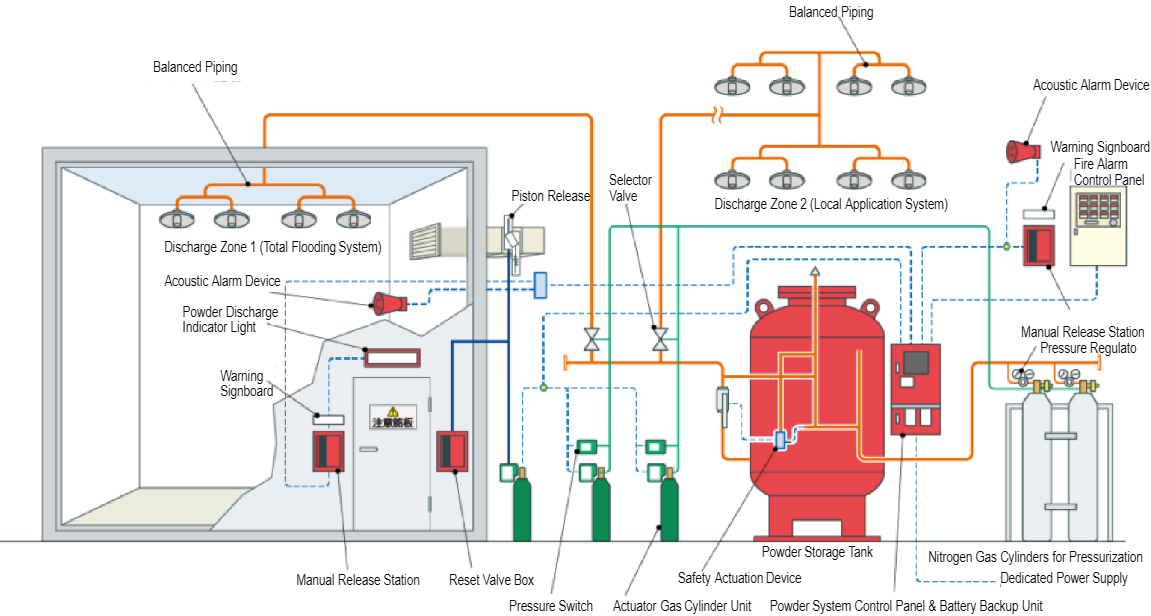
Types of powder fire extinguishing systems
Powder Monitor
A large, fixed firefighting system used for firefighting operations at wharves, piers, and ships of oil and petrochemical plants, as well as at land-based hazardous materials facilities and aircraft hangars.
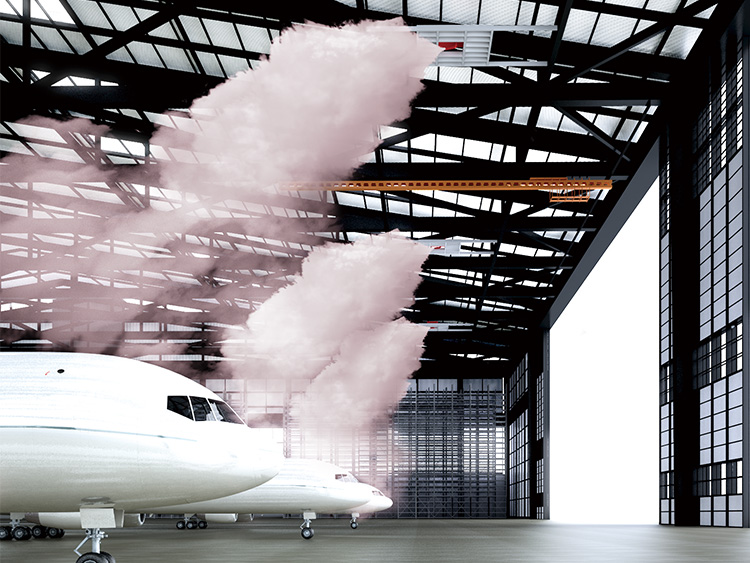
Mobile powder fire extinguishing equipment
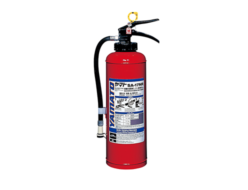
It is used to extinguish small fires in places such as rooftop parking lots and repair shops.

Related Information
Container valve inspection
For powder fire extinguishing systems, it is mandatory to complete the pressure resistance performance testing of the container valve within 30 years of installation.