SINFONIA TECHNOLOGY CO., LTD.
Sinfonia Electromagnetic Stirrer Industrial Infrastructure
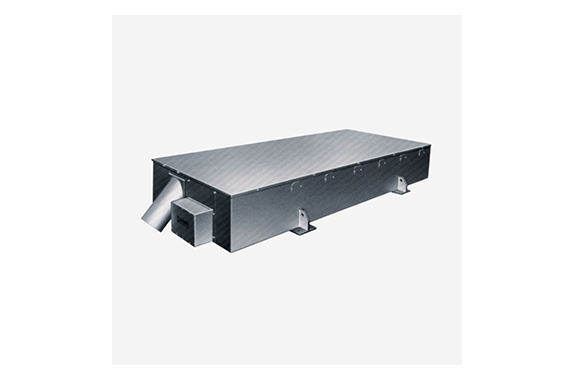
Manufacturer: Sinfonia Technology co., LTD, Ltd.
Model: Electromagnetic Stirrer
Features
1. Uniform Composition, No Segregation
Powerful electromagnetic stirring evenly mixes molten metal, preventing segregation, especially in alloys containing magnesium, titanium, and silicon.
2. Significant Energy Savings
Uniform temperature distribution improves heat absorption, reduces heat loss, and increases energy efficiency.
3. Shorter Melting Time
Enhanced heat transfer accelerates melting, reducing processing time and energy consumption.
4. Reduced Oxidation, Higher Yield
Lower surface temperatures and faster melting minimize oxidation and improve metal yield.
5. Automatic Operation, Easy Maintenance
Fully automatic stirring eliminates manual labor, while the contact-free design minimizes maintenance.
6. Accurate Temperature Control
Uniform molten metal temperatures enable precise measurement and stable temperature control.
7. Reduced Furnace Installation Space
Improved heat absorption allows deeper, more compact furnace designs, reducing installation space.

fig1. Temperature Uniformity

fig2. Components Uniformity
The Principle of Stirring

The electromagnetic stirrer utilizes the principle of a linear motor and differs from the conventional mechanical and decompression types as it is a noncontact stirrer in which no part touches the molten metal. As shown in the diagram, a coil installed at the bottom of the furnace generates a moving magnetic field (H) if a 3 phase AC voltage is applied to this coil (inductor). Electric power force is generated in the molten metal due to the action of the magnetic field (magnetic flux) and causes induction current (I) to flow (Fleming’s right hand rule). This current then acts with the magnetic field of the inductor to induce electromagnetic force (F) in the molten metal according to Fleming’s left hand rule. As this thrust moves in the direction of the moving magnetic field, the molten metal also moves. In other words, an stirring action is applied. Furthermore, as this thrust has components in the horizontal direction and in the vertical direction, the molten metal flows diagonally upwards and results in a uniform temperature in both the top and bottom layers of the molten metal.
Specification
| Model | EMSA-M2 | EMSA-M1 | EMSA-ML | EMSA-L1 | |
|---|---|---|---|---|---|
| Use | Melting furnace Holding furnace | ||||
| Furnace capacity (Ton) | 10~20 | 10~30 | 20~40 | 30~60 | |
| Thickness of furnace bottom (mm) | 400 | 500 | 550 | 650 | |
| Power consumption (KW) (Including EMSA&Blower) | 30 | 40 | 60 | 80 | |
| Operation frequency (HZ) | 1.5 | 1 | 0.8 | ||
| Rating current (A) | 250 | 260 | 280 | 400 | |
| Size of the stirrer unit (mm) | 1,220Wx2,430Lx 440H | 1,270Wx2,870Lx 440H | 1,440Wx3,220Lx 470H | 1,717Wx3,720Lx 550H | |
| Weight of the stirrer unit (ton) | 4.2 | 5.5 | 7.5 | 12 | |
| Blower capacity for cooling coil (KW) | 7.5 | 11 | 18.5 | ||
| Suppied electric source by customer | 1) Input (KVA) | 50 | 70 | 100 | 150 |
| 2) Voltage (V) | 220/200 | 220/200V, 440/400V | 440/400 | ||
| 3) Frequency (HZ) | 50/60 | ||||
| 4) Phase (φ) | 3 | ||||
| Inverter Panel Dimensions (mm) | W2000xD700xH2100 | W3000xD900x H2100 | |||
| Control Box Dimensions (mm) | W320xD200xH490 | ||||
Related Products
-
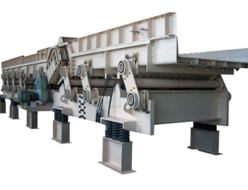
Sinfonia MVCB Type Balanced Conveyor Vibrating Equipment
-
Sinfonia C10 Series Parts Feeders
-
Sinfonia Controller for Electromagnetic Feeders Vibrating Equipment
-
Sinfonia Controller Vibrating Equipment
-
Sinfonia 300mm EFEM Clean Transport Systems
-
Sinfonia WCF Series Water-Resistant Electromagnetic Feeder Vibrating Equipment
REQUEST QUOTATION

PAYMENT

LINK